The Evolution of the game Munokami.com: From 2019 Pioneer to Solana blockchain and Pump.fun Token Launch
The blockchain gaming landscape is littered with short-lived projects, making the endurance of Munokami all the more notable. Originally launched in 2019, this online multiplayer strategy game has quietly carved out a distinct niche over the last seven years. Eschewing the chance-based mechanics typical of the GameFi sector, Munokami relies entirely on skill and strategic foresight.
Now, in a pivotal move for 2026, the project has announced its migration from Bitcoin Cash to the Solana network, marked by a native token launch via Pump.fun.
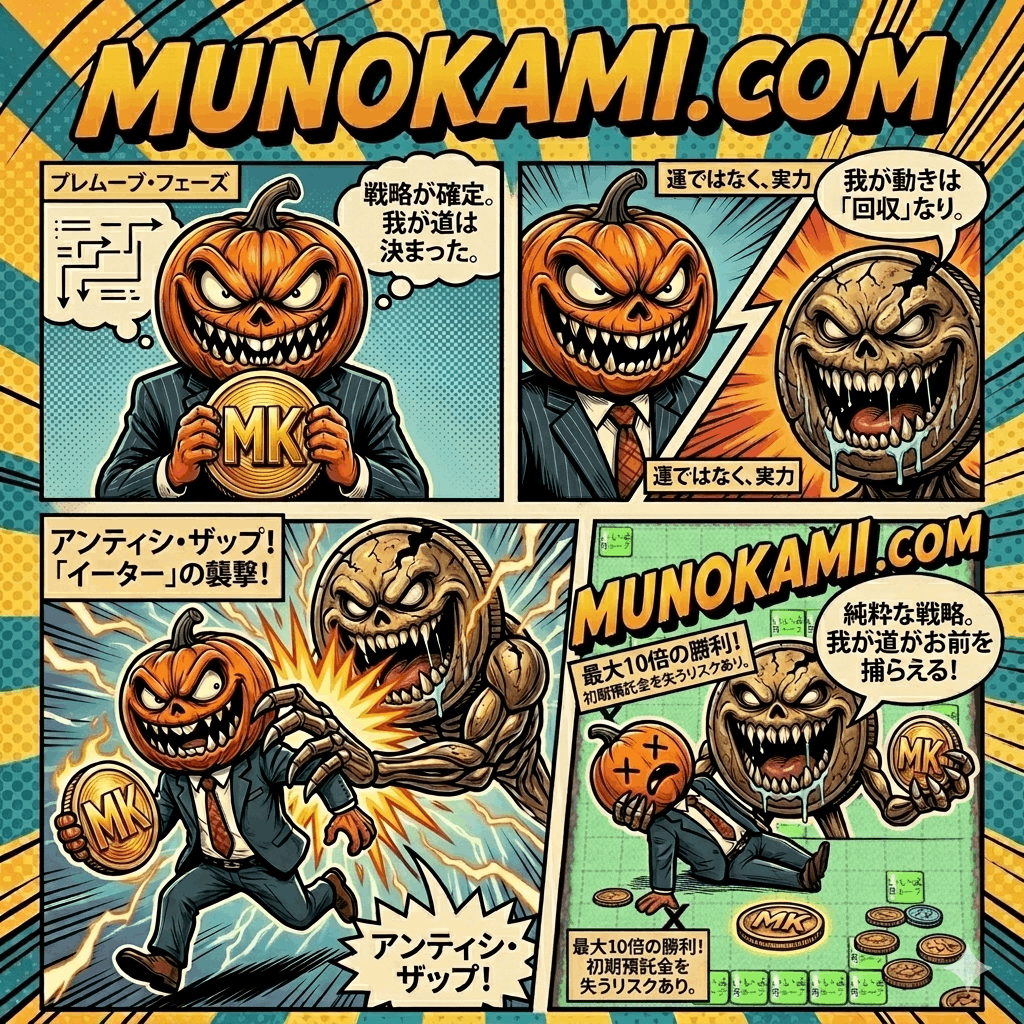
The Core Gameplay: Pure Strategy, Zero Randomness
Munokami operates on a deterministic, peer-to-peer model. Players navigate a customizable obstacle map where movements must be pre-defined and locked in before the round begins. The core tension lies in the hidden variables: no player knows an opponent’s chosen path until execution.
Depending on the chosen character, the objective is either to collect opponent coins or to evade the “Eater” coin. Because the outcome of every match hinges entirely on anticipating opponent behavior relative to starting positions and map layouts, Munokami explicitly distances itself from gambling platforms. Wins can yield up to 10x the initial deposit, drawn directly from the losing opponents’ stakes, while unjoined games are refunded in full.
For players looking to test strategies without financial exposure, the platform also provides a free-to-play mode using virtual currency.
Tokenomics and the Game Pot Distribution
The native token sits at the center of Munokami’s economic engine, directly capturing value from in-game activity. Every match distribution follows a strict protocol:
| Allocation | Destination | Purpose |
| 75.00% | Winners | Incentivizing high-skill performance. |
| 24.95% | Active Holders | Distributed weekly to holders who maintain active gameplay, scaled by Holder Level. |
| 0.05% | Permanent Burn | Sent to a dead address to introduce continuous deflationary pressure. |
The Shift to Solana and the Pump.fun Launch
While Bitcoin Cash provided the low-fee framework necessary for Munokami’s initial growth—which peaked at over 20,000 monthly active players—scaling complex rewards and deep liquidity required a more robust infrastructure. The 2026 migration to Solana addresses these limitations, offering sub-second finality and minimal transactional overhead.
To ensure an equitable distribution, the native token is launching via Pump.fun. The launch framework is structured around three specific phases:
1. Fair Launch Protocol
The token initiates on a strict bonding curve. There are no pre-sales and no team allocations, mitigating the risk of early-stage insider dumping and providing an equal entry point for the community.
2. The Graduation Phase
Upon meeting the target market capitalization, liquidity automatically migrates to Raydium (or PumpSwap), where the liquidity pool tokens are permanently burned. This establishes a secure, unruggable trading floor.
3. Hardcoded On-Chain Security
Built directly into the Pump.fun architecture, the mint authority has been revoked to prevent future supply dilution, and the freeze authority is disabled. Every transaction, distribution, and burn remains entirely verifiable on-chain.
Future Roadmap: Governance and Chaos Mechanics
Looking ahead through 2027 and beyond, Munokami plans to transition into a decentralized economy where token holders act as stakeholders with governance voting rights. Planned updates include:
- World Customization: Community-designed maps featuring interactive elements like bombs and speed boosters, with creators earning token rewards.
- Dual-Coin Chaos: Advanced game modes introducing two simultaneous Eater Coins to increase complexity.
- Elite Tournaments: A weekly 10-match gauntlet offering up to 100x payout multipliers for top-tier players.
Self-Custody and the Triple-Lock Security Architecture
To secure player assets without holding custody of user funds, Munokami utilizes a strict “Triple-Lock” security model. This system enforces absolute user responsibility, meaning data is encrypted such that the team cannot recover lost credentials.
- Immutable Account Identity: Accounts are permanently bound to a verified email provider (Gmail, Outlook, iCloud, Yandex). Email addresses cannot be altered post-registration to eliminate account hijacking.
- Cryptographic Gameplay PIN: A mandatory 4-digit PIN is required to authorize 24-hour gameplay sessions. While a lost PIN prevents gameplay, it is cryptographically immutable, meaning users must still use their external wallet to retrieve funds.
- Trusted Withdrawal Address: The first external wallet used to fund an account is permanently hard-linked as the sole destination for withdrawals. Even if an account or email is compromised, funds can only ever be returned to the original source wallet.